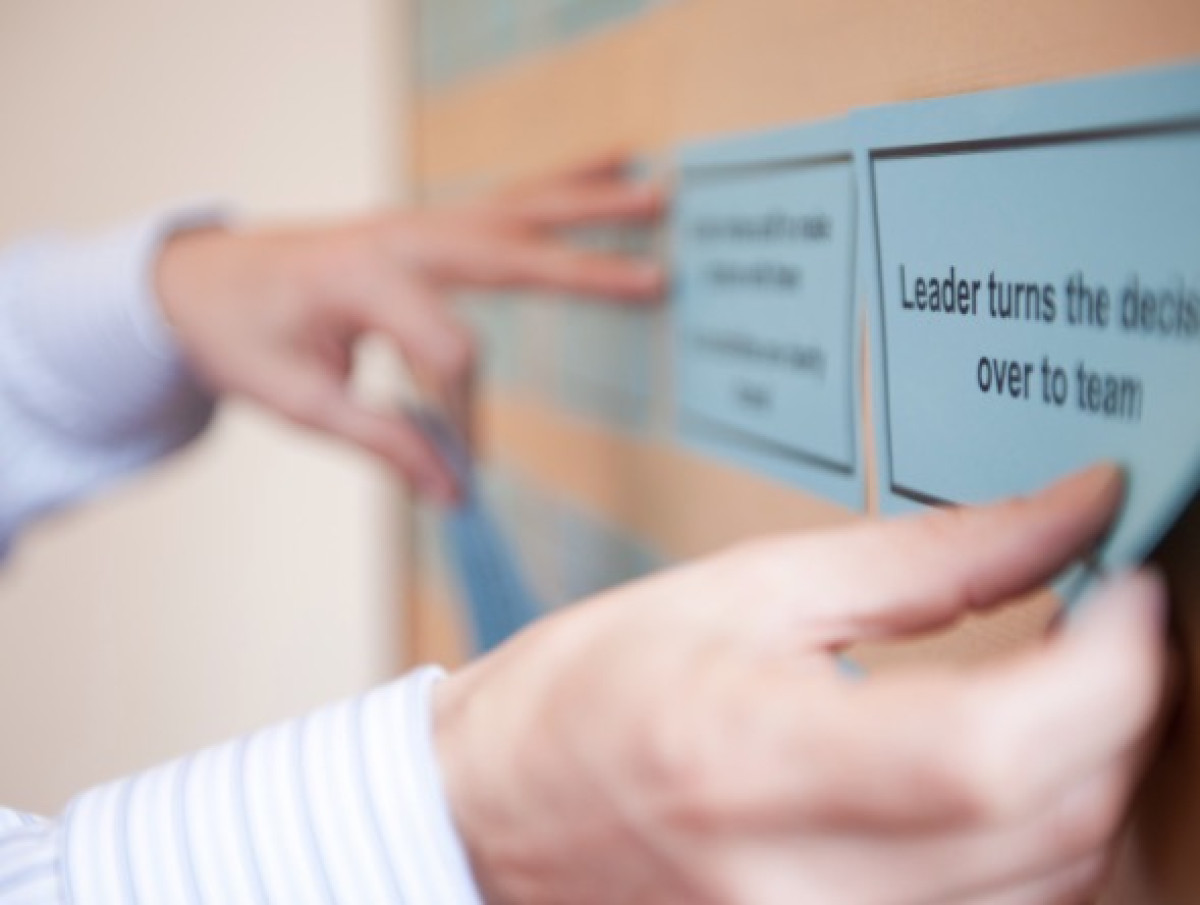
One of the things I say early in facilitation training is this: our tolerance for crap meetings is far too high.
Most people laugh when they hear it. Then they think about the meetings they sat in last week and realise it’s probably true.
Your meetings may be the most honest expression of your leadership. Not the big showcase ones. Not the away days where everyone is on their best behaviour. The ordinary ones. The weekly ones. The ones that have been in the diary so long nobody quite remembers why.
Those meetings are a mirror. Most leaders never look in it.
A meeting is never just a meeting.
It’s a decision - conscious or not - about whose time matters, what deserves collective attention, and how power moves around a room.
Every meeting you call, chair, or tolerate sends a signal. The question is whether you are aware of the signal you are sending.
- A meeting that starts late tells people their time is negotiable.
- A meeting with no clear purpose tells people that activity matters more than outcomes.
- A meeting where the same voice dominates tells people, loudly and without a word, exactly where the hierarchy really sits - regardless of what the org chart says.
None of this requires bad intent. Most leaders who run poor meetings are not careless people. They are unconscious ones.
Watch out for the Ratification Meeting.
You will recognise it. Everyone agrees. Nothing is challenged. The decisions feel strangely inevitable before anyone has spoken.
These meetings often feel efficient. They are frequently anything but.
What they reveal is a leadership culture where safety has been quietly withdrawn. People have learned - through experience, through signal, through watching what happens to those who push back - that the room is not actually a place for honest thinking. It is a place for ratifying what has already been decided.
If that is your meeting, the problem is not the agenda. It is the atmosphere you have created, probably without realising it.
The reverse is also true. A meeting where disagreement surfaces openly - where someone says the uncomfortable thing and the leader leans in rather than smoothing it over - is a meeting that tells people they are safe to think.
Teams that feel safe to think make better decisions, catch problems earlier, and trust each other more readily.
Psychological safety is not built in workshops. It is built, or eroded, quietly, in the ordinary moments of ordinary meetings.
After your next meeting, sit with these three questions:
- Who spoke, and who didn’t - and do I know why?
- Was there a moment of real challenge or discomfort, and what did I do with it?
- If someone observed that meeting without knowing me, what would they conclude about my leadership?
That third question is the one worth lingering on.
Your meetings are not just operational. They are cultural. They are the lived experience of what it means to work with you.
Awareness is the starting point. Not guilt. Not an overhaul of your entire meeting culture by Thursday.
Just the willingness to look clearly at what your meetings are currently doing - and what they could do instead.
Your meetings are already saying something about your leadership. The question is whether you are ready to hear it.
Kinharvie works with leaders and teams to build the awareness and intentional practice that underpins lasting change. If this resonates, we’d love to talk.
Blog written by Paul Cummings, CEO Kinharvie
Want to know more?
Contact us to learn more about our services and how we might be able to help you
Contact Form
Connect with Us!
To keep connected with us follow us on Twitter and ‘like’ us on Facebook
Join our mailing list
Keep informed of regular developments, new training programmes and one-off events at Kinharvie
Thanks for your enquiry. One of our staff will contact you as soon as possible.


Designed & built by Mucky Puddle